16 February 2010
Kia ora ECE ICT PL Colleagues!
Ngā mihi o te Tau Hou!
If you are anything like me, Christmas and New Year seem a very distant past already. However, I hope you were able
to take a relaxing break and have some fun after all the effort finishing off the ECE ICT PL programme.
I am writing to give you an update on what has happened since you completed your Milestone 7 report and ‐ probably
somewhat relieved ‐ pressed that ‘send’ button for the final time.
Writing the final report
Vince Ham, Laura Evans (a research assistant working for CORE) and myself spent the best part of four weeks reading
and synthesising approximately 1400 pages of data generated by the centre reports. From the information gleaned,
we wrote a 110‐page report that was sent to the Ministry of Education. This was structured around three main
headings, ‘Children’s Learning’, ‘Engaging Communities’ and ‘Teacher Learning’. The findings were supported by
numerous examples taken directly from the milestone reports. An appendix in the report contained half‐page
summaries of what each centre investigated and what was found as a result.
Vince and I then presented the essence of the report to a meeting at the National Office of the Ministry on 21st
December. Nick Billowes and Tara Fagan from our team were there in support. In the audience were people from
research, policy and ECE divisions of the MOE. This photo was taken after we presented.
Since then, I have received very positive feedback on the report along the lines of its usefulness to the sector in
general. Pru Drybrugh, who has most recently been responsible for our programme and is holding a copy of the report
in the photo, is very keen to get it on the MOE site as a PDF document. In order for this to happen, there needs to be
some further ‘high end’ editing and tidying up of the layout, both of which I am negotiating at the moment. I will email
you when it is published.
Online exemplars
At the moment it is not clear whether these will end up on the MOE site or the new CORE ECE site (the MOE would
link to them there). The reason for this is the stringent requirements of Government e‐publishing that make putting
them directly on the MOE site quite difficult in their current form. CORE has an editor working on brief scripts to
introduce the videos and on editing some of the written exemplars to make them web‐friendly. I will keep you posted
on these developments.
ECE ICT PL Online
The end of the ECE ICT PL programme means that there is no‐one now being paid to ‘host’ and monitor this site. CORE
is developing a new site for ECE, part of which will be open to everyone and part of which will be ‘subscribe only’.
Some of the material, eg facilitator blog entries, will be transferred to the new site when it is up and running. In the
meantime, we are leaving the old site available to those with ECE ICT PL logins so that you can still access material.
Just be aware please that new items will not be put up and facilitators are not able to address queries and requests as
they did in the past. When the new CORE site is operational we will let you know that we are closing down ECE ICT PL
Online.
Margie Carter article
A couple of weeks before Christmas, I received the final copy of an article written by Margie Carter, who some of you
will remember hearing at the ECE pre‐conference workshop prior to Ulearn last year. The article speaks of her new
view of the place of ICT in ECE as a result of the work she saw generated through our programme. This has been
published in Childcare Exchange in America and will have been distributed very widely across the States. I will attach a
copy of the article for you.
Update on our facilitator team
We have grown from nine to twelve! On February 1st, three PD facilitators from University of Canterbury joined CORE
Education – Jocelyn Wright, Keryn Davis and Justine Mason. This amalgamation of talent gives us a broader base of
expertise across the country as we move into the new user‐pays professional learning environment. Shortly, you will
be receiving a mail out containing information on what we are offering. Information will also be available on the new
ECE area of the existing CORE website (www.core‐ed.net) when that is launched.
Final word
Finally, my heartfelt thanks for all the effort you and your team put into the ECE ICT PL programme over the time it
was running. At times the programme seemed tough I know but then I look at the amazing changes and developments
that you managed to achieve for children and families and I feel confident that, at the end of the day, the NZ tax payer
got a good return on their investment. The work you did will not only live on in your practice ‐ wherever that might be
‐ but also through the report when it becomes available to centres and teacher education providers across the
country.
Warm regards
Ann Hatherly
Early Years Team Leader
CORE‐Education
Friday, January 14, 2011

Wednesday, October 20, 2010


Wednesday, September 29, 2010
Personal philosophy?

When i was studying to be a early childhood teacher i had already been working in and surrounded by the industry for some time. Because of this i already had some ideas on how i felt about it all, most of which i thought were the 'right' ones to have at the time, however when ever i went on practicum or was faced with the question of 'what is my personal philosophy?' i froze up. thinking about it now when i have the time to reflect it was posibly because this questin seems so daunting...MY PERSONAL PHILOSOPHY, it sounds so final. what if i got it wrong, and if i go too P.C then its not really mine, i don't think I'm really a P.C kind of teacher ( not saying i run around being racist or sexist or any of the other 'ists' that come to mind when P.C comes up) I'm talking about the fact that sometimes the world is hard and i do not think that sheltering our children by covering them in bubble wrap is going to prepare them for what happens in the real world. Even the school playground is a dangerous place, all the mixes of personalities there is bound to be a few clashes. Children should not have to like every one in their class, as an adult we are not expected to like every one we meet so why should they (not giving permission to be mean just thinking that no one has to be buddies if they don't want to). Also sharing......if one child had it then they had it, making them share with someone is just teaching the other child if you kick up enough fuss then you get what you want with out waiting. what about teaching children the idea of waiting for what they want, half the time i have discovered it is more about the fuss than the want of the actual item. sharing has a time and a place, group activities where children are aware that sharing is going to come up, rather than someone interrupting their solitary play. My true issue is how can all of this be said without coming across as a rude ignorant and uninformed? i have done the study i have observed interactions and i have come away with these things.......MY ROLE AS A TEACHER THE WAY I SEE IT:
I AM THERE TO SUPPORT EACH INDIVIDUAL IN THIER GROTH AND DEVELOPMENT, I AM THERE TO PROVIDE ALL THE INFORMATION THEY COULD WANT AND MORE TO GUIDE THEM THROUGH THEIR YOUNG YEARS IN LIFE. I AM THERE AS A ROLE MODEL. I AM THERE TO ENSURE THE WHOLE CHILD IS CATERED TO. I WILL BE THERE AS A SCAFFOLD OF INFORMATION, LOVE AND INTEREST IN THEIR LIFE AS I AM PART OF IT. I AM THEIR TO PROVIDE EVERY OPPORTUNITY FOR LEARNING, INTEREST, EXPLORATION AND DISCOVERY. I AM THERE TO BE OPEN TO THEIR IDEAS AND THEIR NEEDS. THEIR FAMILY IS THE MOST IMPORTANT THING IN EACH CHILD'S LIFE, I AM AWARE OF THIS AND AM THERE TO SUPPORT THEM IN THEIR JOURNEY TO GROWING GREAT ADULTS.
research
Get Ready for Back to School with NAEYC!
Ten Tips for Involving Families through Online Communication
It is crucial for families to be involved in their child's early education. While there are many traditional forms of home-school partnerships, this list from NAEYC's Spotlight on Teaching Preschoolers 2 book will help you improve communication with your families.
1. Create a classroom website. 2. Send individual emails to families to share positive information about their child's activities and accomplishments. 3. Post photo stories on the class website. 4. Provide at-home educational activities. 5. Create a family response link or form on the website to elicit comments, questions, and feedback. 6. Establish and moderate a family support discussion forum. 7. Communicate logistical information through group emails. 8. Ensure families' access to technology. 9. Provide opportunities for families to increase their technology skills. 10. Set aside time for technology-based communication.
Ten Tips for Involving Families through Online Communication
It is crucial for families to be involved in their child's early education. While there are many traditional forms of home-school partnerships, this list from NAEYC's Spotlight on Teaching Preschoolers 2 book will help you improve communication with your families.
1. Create a classroom website. 2. Send individual emails to families to share positive information about their child's activities and accomplishments. 3. Post photo stories on the class website. 4. Provide at-home educational activities. 5. Create a family response link or form on the website to elicit comments, questions, and feedback. 6. Establish and moderate a family support discussion forum. 7. Communicate logistical information through group emails. 8. Ensure families' access to technology. 9. Provide opportunities for families to increase their technology skills. 10. Set aside time for technology-based communication.
Monday, September 27, 2010
learning activities, programmes and assessment.
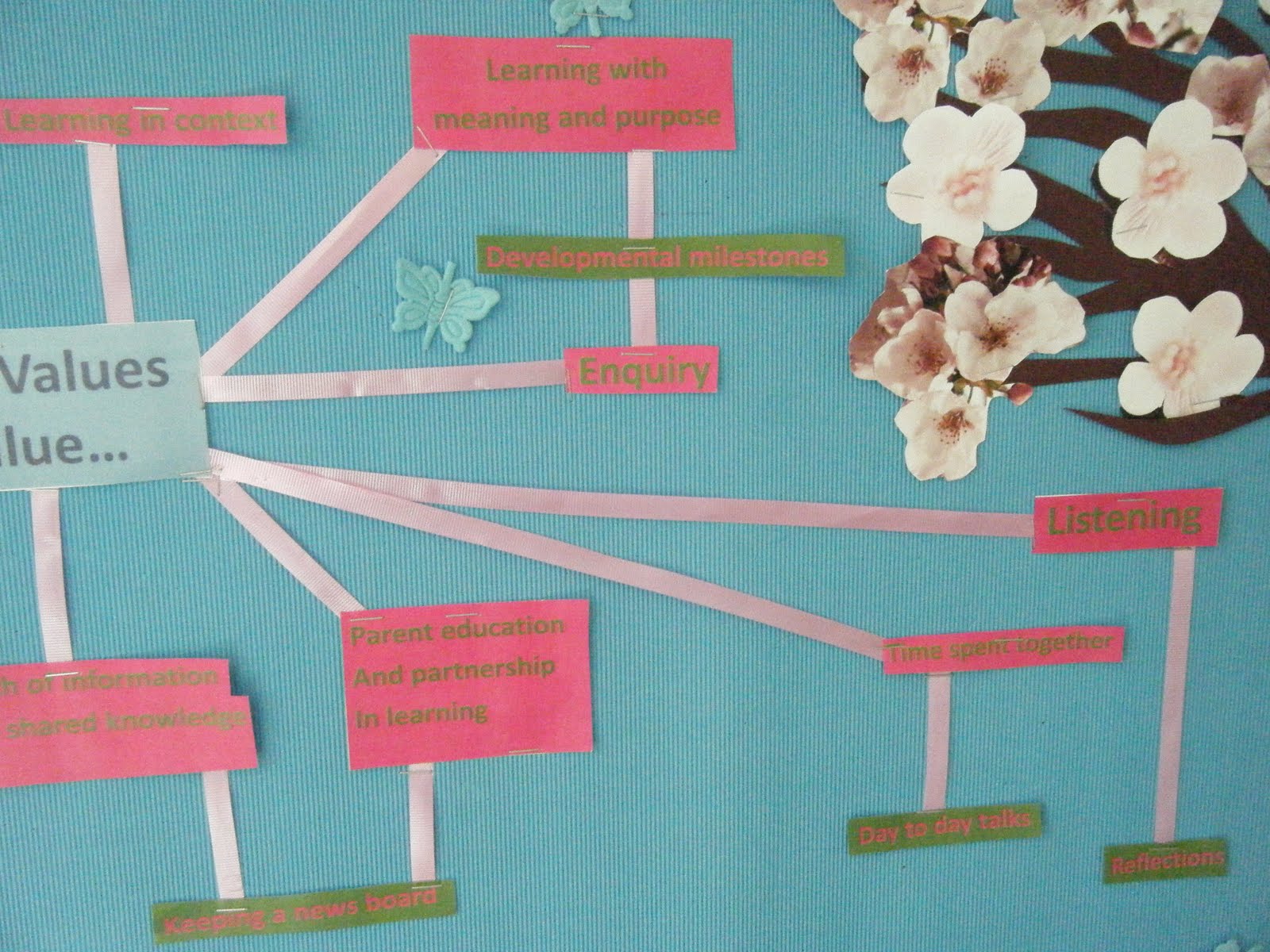
My planning wall: linking our values of our centre to activities and experiences. also bringing in family and whanau, the importance of learning and sharing together.




Current Theory/ ideas
Meeting and greeting key part of the day at childcare
By Elizabeth Binning 4:00 AM Saturday Apr 17, 2010 Share
Rod EmmersonThe first 30 seconds when a child is left at daycare are the most important in making them feel emotionally secure for the rest of the day.
That's the finding from visiting Australian child psychologist Dr Robyn Dolby, who says those first few moments can make a huge difference in the child's emotional wellbeing and in teaching them to understand and organise their feelings.
"In the first 30 seconds of coming into daycare children are looking for someone to connect with. They are asking, 'Am I on your radar, do you see me?'
"Our research has shown that greeting parents and children in a way that focuses on how the child actually feels and including the parent in that conversation makes both of them feel more relaxed and included," she said.
Dr Dolby is in New Zealand this week for a one-day conference for childcare professionals, caregivers, social workers, nurses and other professionals who work with children and families.
Speaking to the Weekend Herald, she said research had revealed that when children arrived at preschool with their mum and dad, they look around for someone to connect with.
Failure to find that connection straightaway meant the child might take longer to feel they had a place in the daycare. Taking longer to settle in meant it could take longer for them to learn.
The research comes from a 10-year project called Attachment Matters - From Relationships to Learning at Preschool.
Part of that project involves creating "play spaces" where staff sit down in a place in the playground conducting an activity and don't move from there for the first hour of the day.
Dr Dolby said an example might be a teacher always being in the sandpit each morning so when children arrived they could seek out their favourite carer and go straight to them. It also created an opportunity for parents, carers and children to interact.
The philosophy has recently been taken up by a playcentre run by the Anglican Trust for Women and Children in Auckland, which is hosting Dr Dolby this week.
Trust clinical director Michelle Ball said the model was working well, with significant changes noticed by both staff and parents.
Children seemed more settled and happier.
By Elizabeth Binning | Email Elizabeth
By Elizabeth Binning 4:00 AM Saturday Apr 17, 2010 Share
Rod EmmersonThe first 30 seconds when a child is left at daycare are the most important in making them feel emotionally secure for the rest of the day.
That's the finding from visiting Australian child psychologist Dr Robyn Dolby, who says those first few moments can make a huge difference in the child's emotional wellbeing and in teaching them to understand and organise their feelings.
"In the first 30 seconds of coming into daycare children are looking for someone to connect with. They are asking, 'Am I on your radar, do you see me?'
"Our research has shown that greeting parents and children in a way that focuses on how the child actually feels and including the parent in that conversation makes both of them feel more relaxed and included," she said.
Dr Dolby is in New Zealand this week for a one-day conference for childcare professionals, caregivers, social workers, nurses and other professionals who work with children and families.
Speaking to the Weekend Herald, she said research had revealed that when children arrived at preschool with their mum and dad, they look around for someone to connect with.
Failure to find that connection straightaway meant the child might take longer to feel they had a place in the daycare. Taking longer to settle in meant it could take longer for them to learn.
The research comes from a 10-year project called Attachment Matters - From Relationships to Learning at Preschool.
Part of that project involves creating "play spaces" where staff sit down in a place in the playground conducting an activity and don't move from there for the first hour of the day.
Dr Dolby said an example might be a teacher always being in the sandpit each morning so when children arrived they could seek out their favourite carer and go straight to them. It also created an opportunity for parents, carers and children to interact.
The philosophy has recently been taken up by a playcentre run by the Anglican Trust for Women and Children in Auckland, which is hosting Dr Dolby this week.
Trust clinical director Michelle Ball said the model was working well, with significant changes noticed by both staff and parents.
Children seemed more settled and happier.
By Elizabeth Binning | Email Elizabeth
Teaching and Learning
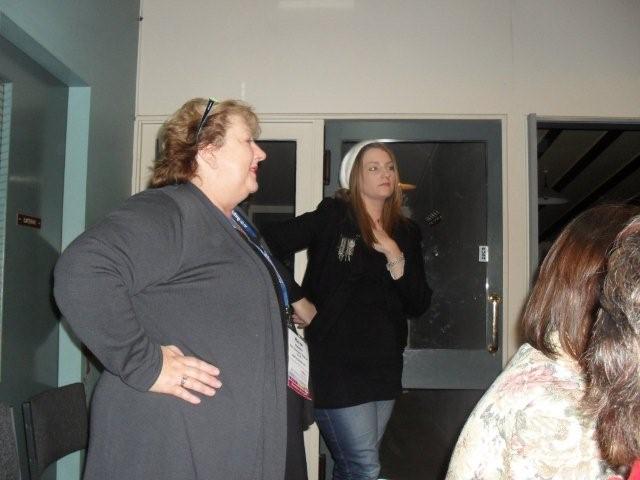

Conference 2010, this was my fist conference where i was helping to present, it was an opportunity or me to teach others what happens in my centre and share ideas on a national level. it was also a great learning curve for me as a teacher, usually i am surrounded by infant and toddlers when i teach not teacher that have trained and worked in the educaton sector for years (many more than myself). It was a great experience and i have now gone further from it, presenting our ideas and practices of ICT IN ECE to several different groups, training groups and other conferences. i look forward to extending my knowledge through interactions with other teachers.
Subscribe to:
Posts (Atom)